Table of contents
Medical Disclaimer:
The information provided here is for educational purposes only and does not replace professional medical advice, diagnosis, or treatment. Always consult your doctor or neurologist for personalised guidance, especially if symptoms worsen or change.
Constipation in Parkinson’s Disease
Executive Summary
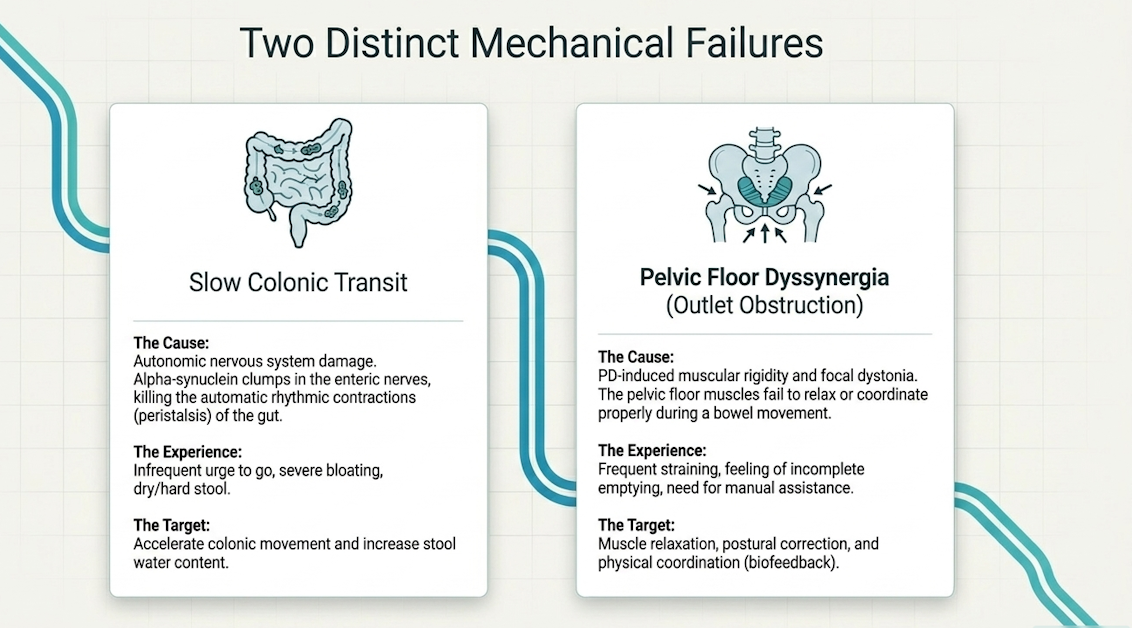
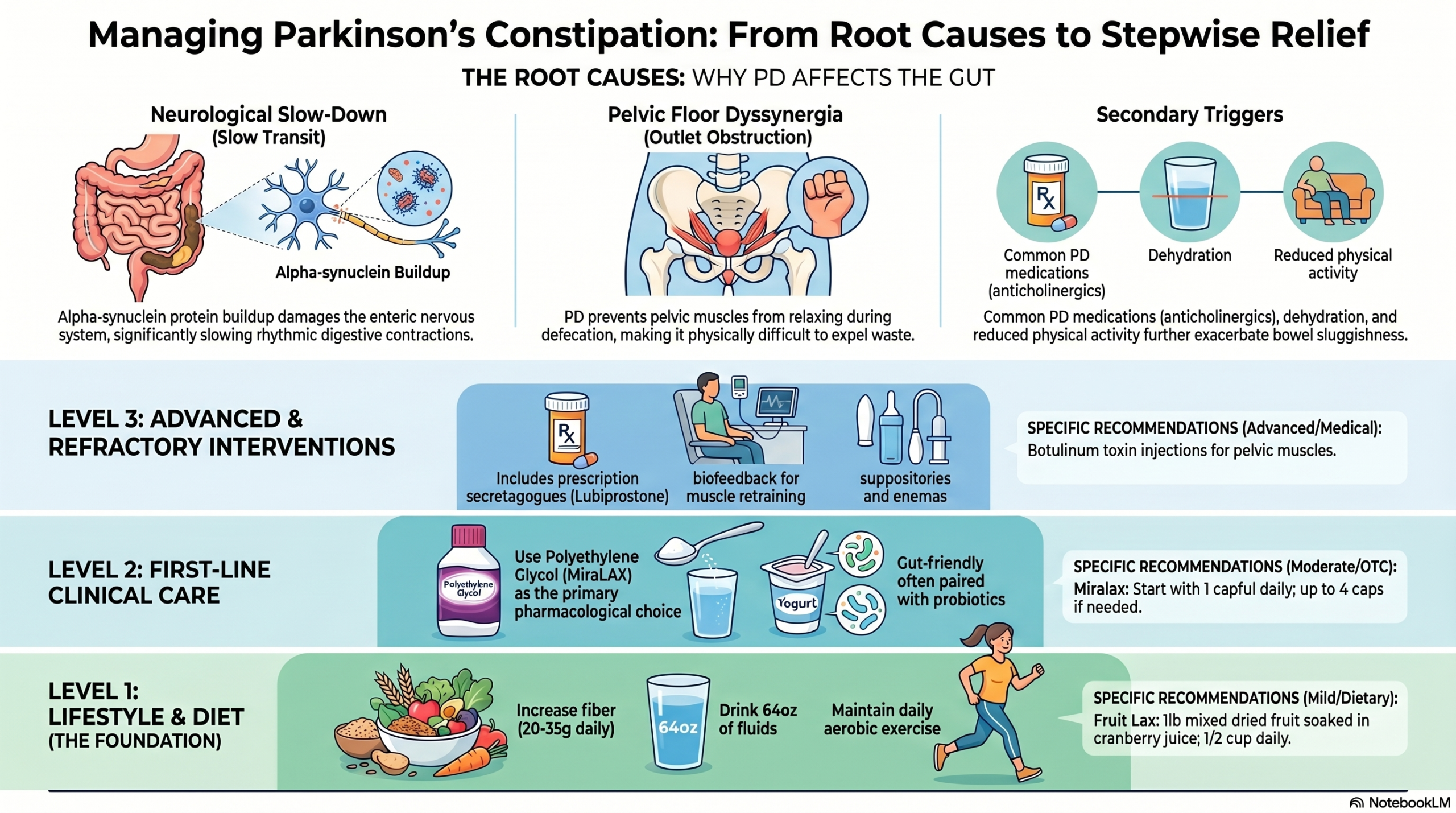
Constipation is one of the most prevalent and debilitating non-motor symptoms of Parkinson’s disease (PD), affecting between 20% and 80% of patients. It frequently serves as a prodromal marker, appearing up to 20 years before the onset of cardinal motor symptoms. The condition is primarily driven by the deposition of alpha-synuclein in the enteric nervous system (ENS) and damage to the autonomic nervous system, which regulates involuntary muscle movements in the intestinal tract.
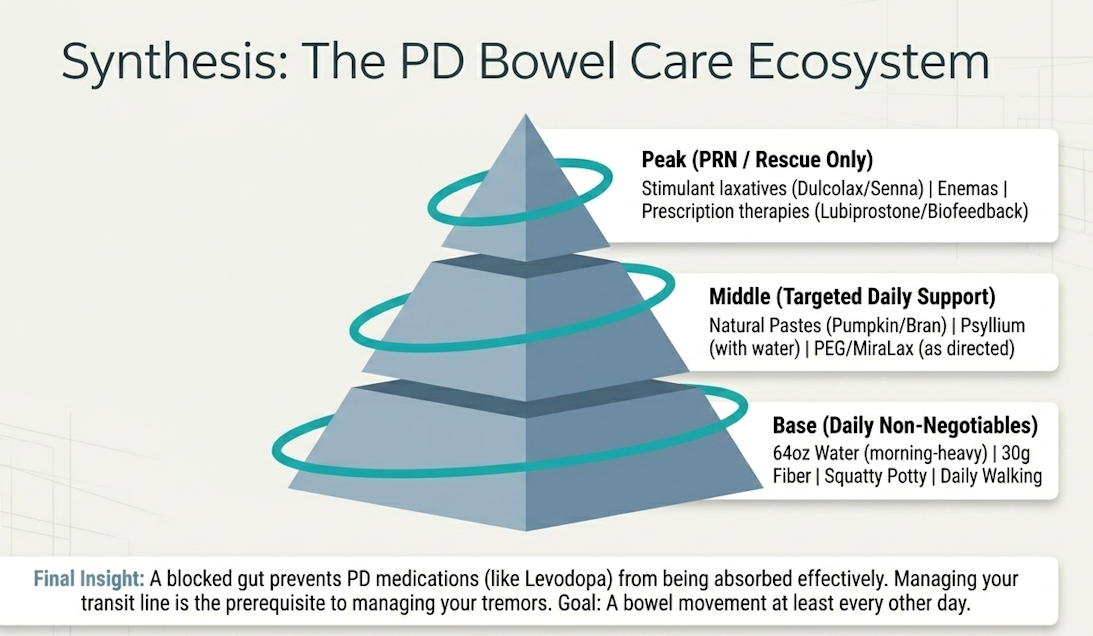
Effective management requires a multimodal approach beginning with aggressive lifestyle and dietary modifications. Key interventions include high fiber intake (20–35g daily), significant hydration (64oz daily), and regular physical activity. When lifestyle changes are insufficient, a tiered pharmacological strategy is employed, starting with bulk-forming laxatives and progressing to osmotic and stimulant agents. In advanced cases, severe colonic dysmotility can lead to life-threatening complications such as fecal impaction and hydronephrosis.
Pathophysiology and Progression
The gastrointestinal dysfunction observed in PD is a systemic manifestation of the disease’s neurodegenerative process.
Neurological Mechanisms
Alpha-Synuclein Deposition: Pathological accumulation of alpha-synuclein in the myenteric plexus and submucosal ganglia of the GI tract disrupts peristalsis, leading to slow colonic transit.
Autonomic Dysfunction: Damage to the autonomic nervous system impairs the involuntary muscle movements required for digestion and movement through the intestinal tract.
Braak Staging: According to the Braak hypothesis, PD pathology often begins in the olfactory bulb and the dorsal motor nucleus of the vagus nerve (Stage 1), explaining why constipation and hyposmia (loss of smell) are among the earliest recognizable features.
Clinical Staging (Hoehn and Yahr Scale)
The Hoehn and Yahr scale is used to describe the progression of PD symptoms, which correlates with the severity of non-motor complications like constipation.
Stage Description
1 Unilateral involvement only, usually with minimal functional disability.
2 Bilateral or midline involvement without impairment of balance.
3 Mild to moderate bilateral disease; some postural instability; physically independent.
4 Severe disability; still able to walk or stand unassisted.
5 Confinement to bed or wheelchair unless aided.
Dietary and Lifestyle Management
The primary treatment approach for PD-related constipation is preventative, focusing on diet and lifestyle changes.
Essential Habits
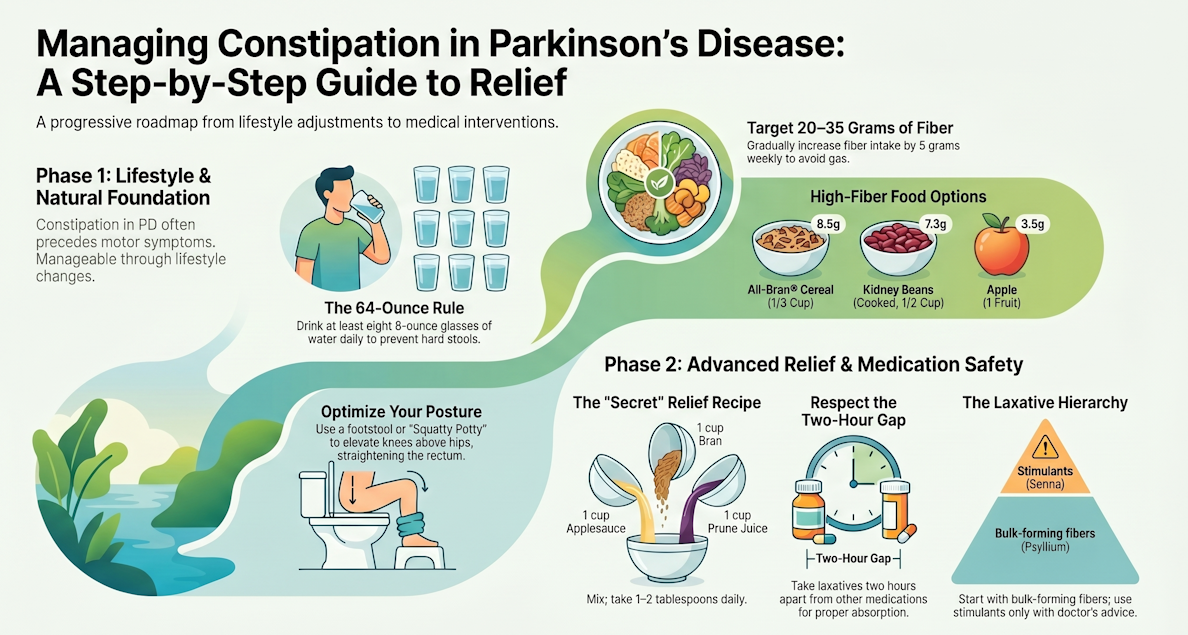
- Fiber Intake: Patients should aim for 20 to 35 grams of fiber daily. Intake should be increased gradually (5 grams per week) to avoid gas and bloating.
- Hydration: At least six to eight 8-ounce glasses of water daily are recommended, particularly when increasing fiber or using bulk-forming laxatives.
- Physical Activity: Aerobic activity, strengthening, and stretching stimulate the bowels.
- Toileting Routine: Establishing a fixed daily time for bowel movements and never ignoring the urge to defecate is critical.
- Dietary Fiber Sources
Food Item Serving Size Grams of Fiber
All-Bran® 1/3 cup 8.5
Kidney beans (cooked) 1/2 cup 7.3
Dried Sunflower Seeds 1 cup 4.0
Lentils (cooked) 1/2 cup 3.7
Apple 1 medium 3.5
Prunes 3 prunes 3.0
Recommended “Natural” Recipes
Sources provide several specialized recipes to stimulate regularity:
- The APDA Mixture: 2 parts unprocessed wheat bran, 1 part applesauce, and 1 part prune juice. Dosage: 1–2 tablespoons daily.
- Constipation Paste: 1 lb pitted prunes, 1 lb raisins, 1 lb figs, 1 cup brown sugar, 1 cup lemon juice, and senna leaf tea. Simmered and blended into a paste. Dosage: 1–2 tablespoons daily.
- Canned Pumpkin: Two rounded tablespoons of plain canned pumpkin at breakfast has been noted as an effective natural remedy.
Mechanical and Physical Interventions
In addition to diet, mechanical aids and physical techniques can address “outlet constipation” (pelvic floor dysfunction).
- Toilet Posture: Using a “Squatty Potty” or footstool to elevate the knees above the hips straightens the rectum, reducing strain and improving elimination.
- Pelvic Floor Exercises: Targeted strengthening and relaxation exercises (similar to Kegels) can help manage uncoordinated pelvic muscles.
- Colon Massage: Daily clockwise abdominal massage starting from the right side can manually stimulate bowel movement.
- Breathing Techniques: Diaphragmatic breathing helps engage and relax the pelvic floor muscles naturally during bowel movements.
Pharmacological Management
When lifestyle interventions fail after approximately two weeks, pharmacological agents are available. SEE YOUR DOCTOR/NEUROLOGIST.
TYPES OF TREATMENT
- Bulk-Forming Laxatives (First Line): These absorb liquid to soften stool and naturally stimulate the bowel.
- Stool Softeners: . Generally used for prevention rather than treatment of active constipation.
- Osmotic Laxatives: Recommended as a primary pharmacological option for slow colonic transit.
- Stimulant Laxatives: S These increase muscle contractions in the intestinal wall but can be habit-forming.
Medications That May Worsen Constipation
Patients and providers should monitor for the following medications, which can exacerbate GI transit issues:
- SOME PD Medications: Trihexyphenidyl (Artane®), Benzatropine (Cogentin®).
- Narcotic Pain Meds
- Antacids/Supplements:
- Antidepressants:
- Antihistamines:
Advanced Parkinson’s disease presents a higher risk for severe colonic dysmotility, which may manifest as pseudo-obstruction or fecal impaction.
The full picture
Case Study: Hydronephrosis
A clinical case involving a 77-year-old female with advanced PD demonstrated that severe colonic distension can lead to hydronephrosis (swelling of the kidney due to urine buildup). The enlarged, impacted rectosigmoid colon exerted external pressure on the right ureter, causing obstructive uropathy. Resolution was only achieved through aggressive manual disimpaction, rectal tube placement, and a high-dose pharmacological regimen.
Expert Guidelines for Defecatory Dysfunction
For patients with pelvic floor dyssynergia (inability to relax muscles during defecation), experts suggest:
- Injections of Levodopa or Apomorphine.
- Botulinum toxin type A injections into the puborectalis muscle.
- Biofeedback therapy or functional magnetic stimulation.
Conclusion
Management of constipation in Parkinson’s disease is essential not only for patient comfort but also to ensure the consistent absorption of motor-symptom medications. While alpha-synuclein-related damage to the ENS currently has no cure, a proactive regimen of high fiber, hydration, exercise, and strategic pharmacological use can mitigate the risk of severe complications.
NOTE: Always consult a NEUROLOGIST