Table of contents
Medical Disclaimer:
The information provided here is for educational purposes only and does not replace professional medical advice, diagnosis, or treatment. Always consult your doctor or neurologist for personalised guidance, especially if symptoms worsen or change.
Elevating Quality of Life:
A Comprehensive Guide to Parkinson’s Daily Routine Management
- The Strategic Framework for Movement: Comparative Exercise Interventions
Exercise is no longer viewed merely as a supplemental activity but as the primary non-pharmacological cornerstone in the management of Parkinson’s Disease (PD). Every movement you commit to is a strategic investment in your future autonomy. Systematic clinical reviews highlight that structured physical activity fosters neuroplasticity—the brain’s ability to reorganize and form new neural connections. By reducing inflammatory cytokines and boosting nerve growth factors like Brain-Derived Neurotrophic Factor (BDNF), exercise serves as a mechanical intervention that directly influences the biochemical environment of the brain, effectively slowing the decline of motor function.
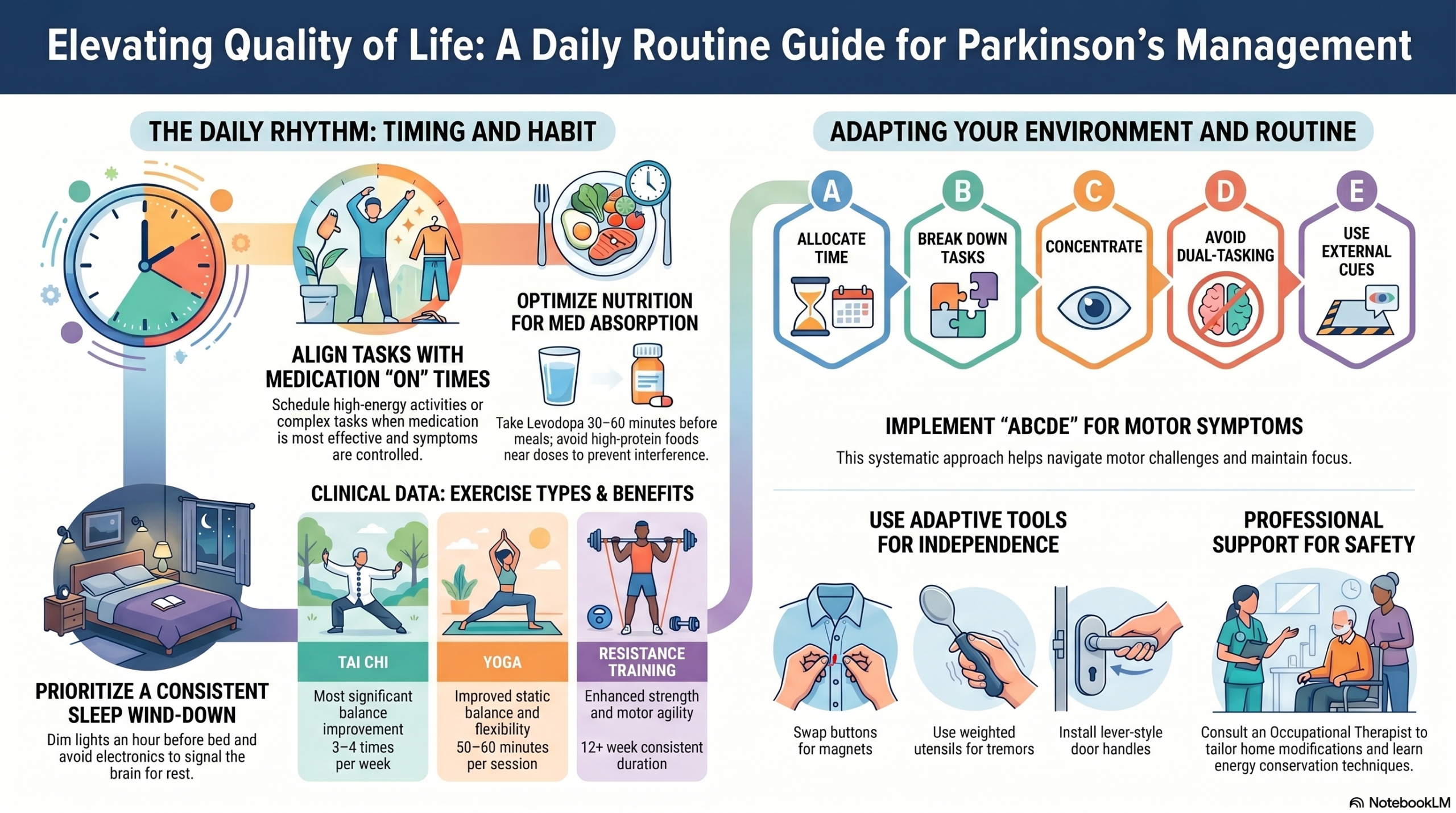
While all movement and excercise provide value, Tai Chi is uniquely effective for those with PD compared to healthy older adults. It specifically integrates vestibular and visual inputs with fluidity and stillness, addressing the “mechanistic” level of balance that PD compromises. To achieve clinically significant improvements in motor symptoms, the data suggests a high-frequency “sweet spot”: performing these interventions 3 to 4 times per week for at least 12 weeks.
While physical movement provides the mechanical foundation for wellness, the body’s performance is deeply influenced by the biochemical environment provided by nutrition.
——————————————————————————–
- Nutritional Architecture for Neuroprotection and Medication Efficacy
Strategic dietary choices are instrumental in modulating neuroinflammation and ensuring that pharmacological treatments reach the brain effectively. Because PD affects the enteric nervous system often years before motor symptoms appear, your gut is the strategic front line for neuroprotection.
The Gut-Brain Axis and Alpha-Synuclein
“Braak’s Hypothesis” suggests that PD may originate in the gut before migrating to the brain.
The Mechanism: An unhealthy diet high in saturated fats and processed foods promotes “gut dysbiosis” (an imbalance of bacteria) and “leaky gut” (increased intestinal permeability).
The Path: This environment triggers the misfolding and aggregation of α-synuclein proteins in the gut. These aggregates are then retrogradely transported to the central nervous system via the vagus nerve, acting like a “prion-like” spreading mechanism that eventually destroys dopaminergic neurons.
Neuroprotective Factors:
- Flavonoids (Anthocyanins): Found in berries, these compounds scavenge free radicals and inhibit α-synuclein fibrillation.
- Coffee: Acts as an A2A receptor antagonist, reducing excitotoxicity.
- Soy Products: Unlike animal dairy, soy milk increases urate levels, providing a strategic neuroprotective alternative for patients.
Risk Factors:
- Dairy: High consumption is linked to increased PD risk due to its urate-lowering effects (urate is a potent antioxidant) and the presence of pesticides like heptachlor epoxide, which has been found in the brains of those with high milk intake.
- Saturated Fats: High intake is associated with striatal neuron damage and chronic low-grade inflammation.
Optimizing Levodopa Pharmacokinetics
To maximize medication efficacy, adopt a Protein Redistribution Protocol. Levodopa competes with Large Neutral Amino Acids (LNAAs) to cross the Blood-Brain Barrier (BBB). Specifically, the amino acid L-leucine can decrease Levodopa absorption by as much as 50%.
Pro-Protocol: Consume the majority of your daily protein during the evening meal to prevent daytime “off” periods.
Timing: Ideally, take Levodopa 60 minutes before or 2 hours after a meal.
A plant-based, high-fiber diet does more than provide antioxidants; it directly facilitates gastrointestinal motility. By resolving constipation, fiber ensures that medication is not trapped in the stomach and can be absorbed promptly in the small intestine, reducing the motor fluctuations that compromise your daily independence.
An optimized internal environment requires external tools to translate improved biochemistry into daily autonomy.
——————————————————————————–
- Enhancing Autonomy through Assistive Technology and Environmental Design
The transition toward viewing assistive devices as “independence accelerators” is vital for preserving dignity. These tools are not signs of defeat; they are strategic assets that compensate for tremors and bradykinesia.
- Daily Task Optimization
- Mobility & Safety:
- Rollators and canes to manage gait freezing.
- Voice-activated smart home technology to eliminate fine-motor challenges with switches.
- Self-Care:
- Adaptive weighted utensils to counteract tremors.
- Magnetic fasteners for dressing independence.
Communication & Cognition:
- Voice amplifiers for softened speech.
- Memory apps to manage the complexity of multi-drug schedules.
Strategic financial planning is as important as physical planning. Under the United States Assistive Technology Act, every state receives grants to help citizens access and fund these technologies. Utilize your Occupational Therapist (OT)—the specialist who matches your personal strengths to these tools—to provide the written prescriptions necessary for insurance coverage. While a PT manages the “how” of walking, the OT manages the “how” of living safely, minimizing the fear of falling that can paralyze a routine.
A day of active, assisted living must culminate in high-quality rest to allow the brain to consolidate learning and recover.
——————————————————————————–
- Restorative Sleep Hygiene and Circadian Calibration
Sleep is the cognitive “cleanup” phase for the brain. In PD, the internal biological clock is often disrupted, requiring a rigorous protocol to recalibrate your resilience.
The Sleep-Well Protocol
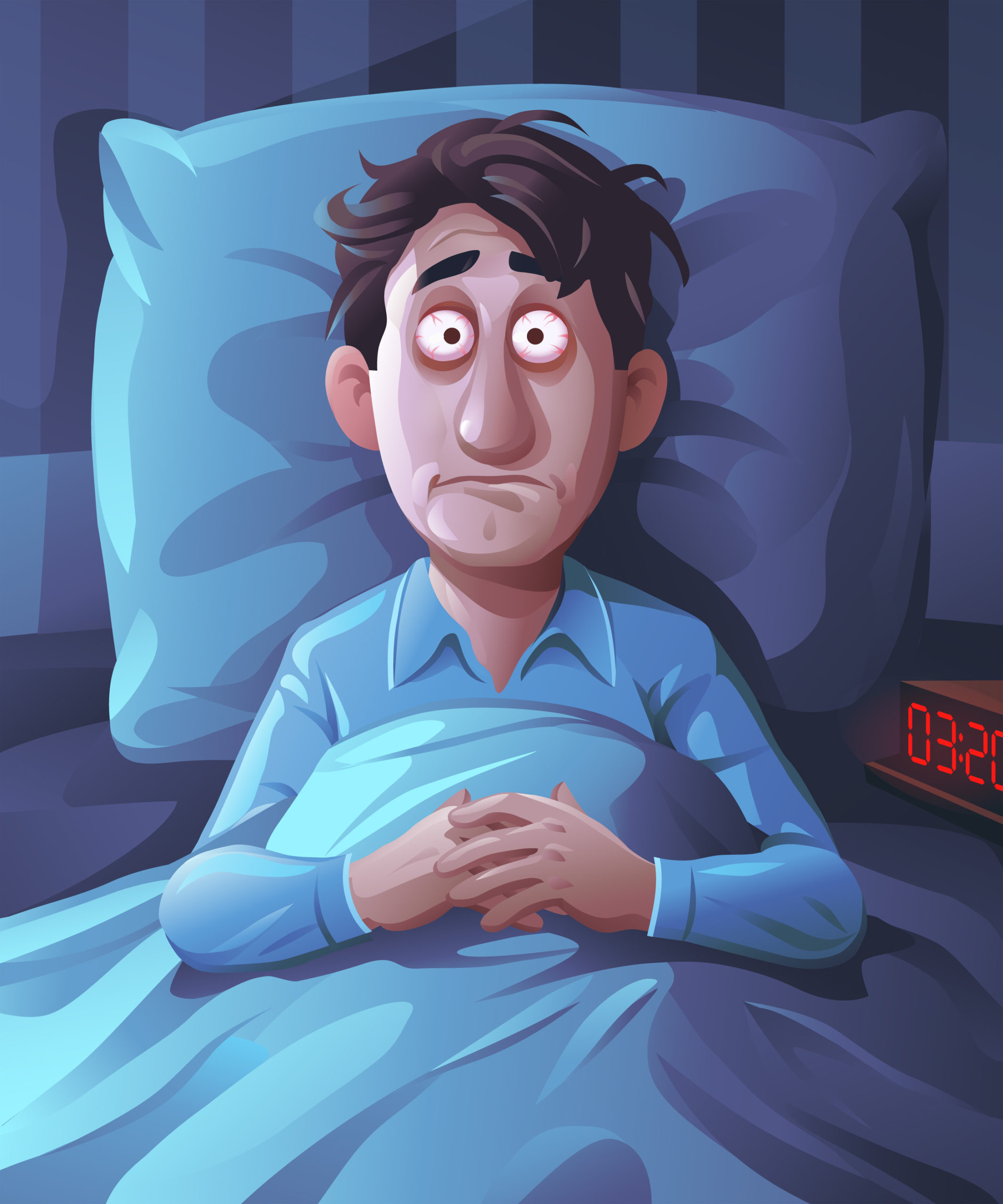
- The “15-Minute Rule”: If sleep doesn’t come within 15 minutes, leave the bed. Perform an undemanding task (like reading) until tired. Do not stare at the clock; take a “best guess” on the time.
- Hydration Timing: Limit liquid intake after dinner to reduce nocturia (nighttime bathroom visits).
- Environmental Control: Keep the room cool and dark.
- Device Blackout: Avoid tablets and electronics immediately before bed to prevent blue light from suppressing melatonin.
- Addressing Common Disruptions
- Common challenges like REM sleep behavior disorder or restless legs are exacerbated by a lack of circadian rhythm. A key strategic intervention is daytime sun exposure. Natural light helps reset the biological clock, making the transition to nighttime sleep more seamless.
There is a symbiotic relationship between daytime movement and nighttime sleep. High-intensity movement during the day builds “sleep pressure.” Without exercise, you enter a vicious cycle of daytime fatigue and nocturnal insomnia. Using daytime movement to clear metabolic waste through deep sleep is a non-negotiable part of your “shield” against progression.
——————————————————————————–
- The Multidisciplinary Support Network
The complexity of Parkinson’s requires you to act as the CEO of your care! A multidisciplinary approach ensures better results
Your core activities
- Cognitive stimulation
- Social interaction
- Exercise routine
- Strategies for daily living and environment.
- Speech training
- Better sleep
- Medicines and food timing and quantity
It is critically important to seek experts specifically trained in Parkinson’s, often found at Centres of Excellence. These specialists ensure you get the information you need
Final Synthesis
Integrating high-frequency exercise (Tai Chi and Resistance Training), a neuroprotective diet that manages the urate-protein balance, proactive assistive technology, and calibrated sleep hygiene creates a synergistic “shield.” While no single intervention is a cure, their collective application maximizes your independence and builds a robust defense against the progression of the disease. Your routine is Your power.