Table of contents
Medical Disclaimer:
The information provided here is for educational purposes only and does not replace professional medical advice, diagnosis, or treatment. Always consult your doctor or neurologist for personalised guidance, especially if symptoms worsen or change.
1. Introduction: Reclaiming Intimacy in the Parkinson’s Journey
Intimacy is not a peripheral concern; it is a fundamental component of clinical health, emotional stability, and overall patient well-being. As Parkinson’s disease (PD) progresses, sexual health frequently encounters complex neurological and physical hurdles. Addressing these changes is a strategic necessity for maintaining quality of life. At the European Parkinson Therapy Centre (EuPaTh), we advocate for a “matter-of-fact” medical and relational approach. By de-stigmatizing sexual dysfunction to facilitate clinical intervention, we treat these issues with the same rigor as gait disturbance or tremors, empowering patients and partners to maintain their connection.
Mission Statement
The EuPaTh centre is committed to radical honesty and empowerment. Our objective is to provide evidence-based clinical information that enables patients and their partners to navigate the complexities of Parkinson’s without sacrificing physical and emotional closeness.
Effectively managing sexual health begins with an objective assessment of the physical landscape and an understanding of how the biological realities of the condition intersect with personal intimacy.
2. The Physical Landscape: Motor Symptoms and Sexual Dysfunction
Parkinson’s is frequently misunderstood as solely a “movement” disorder. However, the motor symptoms that define the condition—bradykinesia, tremors, and rigidity—directly impact the mechanics of physical lovemaking. These symptoms can transform previously fluid movements into sources of physical discomfort or logistical frustration, requiring proactive clinical management.
Primary Physical Challenges
Motor Interference: Slowness of movement (bradykinesia), resting tremors, and muscle rigidity can physically impede the act of sex, making specific positions or sustained movements difficult to maintain.
Arousal and Performance: Autonomic and neurological changes often lead to specific dysfunctions. Men frequently encounter difficulty achieving or maintaining erections or experience delayed ejaculation. Women often report increased vaginal dryness and associated dyspareunia (pain during intercourse).
The Fatigue Factor: Chronic exhaustion is a pervasive non-motor symptom. When combined with the side effects of dopaminergic medications, general fatigue can significantly suppress libido and the physical energy required for sexual activity.
It is clinically important to distinguish between symptoms caused specifically by Parkinson’s and the natural physiological shifts that occur with normal aging. While PD can accelerate or complicate sexual dysfunction, many changes in performance and desire are a standard part of the aging process for the general population and should be addressed as such.
Physical barriers represent only one facet of the challenge. Non-motor symptoms often create significant psychological distance, acting as primary drivers of change in sexual health
The “Invisible” Barriers: Psychological, Cognitive, and Role Changes
Identifying non-motor symptoms is vital for effective management. Cognitive shifts and psychological burdens often act as “invisible” barriers that prevent the initiation of physical closeness.
Challenge
- Impact on Intimacy
- Self-Esteem & Body Image
- Postural changes or tremors can lead to a diminished sense of sexual attractiveness.
- Depression & Distractibility
- Low mood saps desire; inability to focus prevents presence during intimate moments.Memory & Cognitive Change
- Processing delays or memory issues can interfere with the “flow” and spontaneity of intimacy.
- Inability to Read Cues
- Neurological changes can make it difficult to interpret a partner’s nonverbal communication or facial expressions.Desire Differences
- Discrepancies in libido (often exacerbated by meds or fatigue) create relational friction.
- Communication Difficulties
- Difficulty articulating needs or symptoms leads to a breakdown in mutual understanding.
- Role Changes
- The shift from “equal partner” to “patient and caregiver” can erode the erotic spark.
- The “Deroling” Analysis
One of the most significant psychological hurdles is the shift in identity within the relationship. When one partner assumes the role of care-provider and the other the role of patient, the romantic bond can be buried under the weight of clinical tasks. “Deroling”—the conscious effort to step out of these clinical identities to function simply as a couple—is a critical neurological rehabilitation strategy. This requires a dedicated effort to separate daily care routines from the time reserved for emotional and physical connection.
4. Expanding the Menu: A Neurological Rehabilitation Strategy for Intimacy
Transitioning from “goal-oriented sex” to a model of “shared pleasure” allows for a more resilient intimate life. This clinical shift removes the pressure of performance and replaces it with an exploration of sensory satisfaction.
Exploring the Intimacy Menu
Patients and partners are encouraged to expand their repertoire through the following:
- Erotic and Sensual Touch: Engaging in touch that includes the genitals but is not necessarily focused on them exclusively.
- Sensory Enhancers: Using naked baths or showers together to enjoy skin-to-skin contact and the sensation of water.
- Technology and Tools: Incorporating vibrators or sex toys to assist with arousal, particularly when motor symptoms make manual stimulation difficult.
- Alternative Expressions of Climax: Accepting and pursuing orgasm for one or both partners through means other than traditional penetration.
- Intercourse: Maintaining intercourse as a valid and continued option for connection when desired and physically feasible.
Making Affection a Destination
By making affection the end goal, couples maintain closeness through “no-agenda” touching, which reduces performance anxiety:
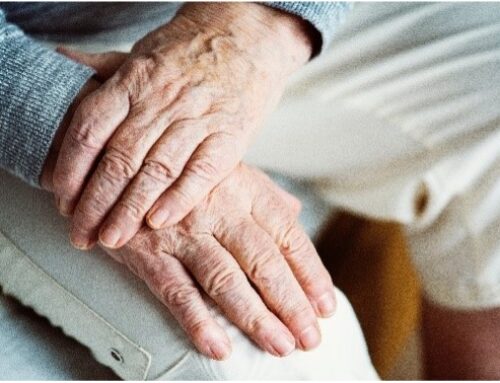
“Still Hands”: Resting hands on one another without movement to foster connection.
Long Embraces: Sustained holding to provide security and sensory grounding.
Gentle Stroking: Focusing on the face, hair, or skin to communicate appreciation.
Relaxing Touch: General massage or holding each other in bed without a sexual objective.
5. Tactical Solutions and Environmental Adjustments
Bypassing physical limitations requires proactive environmental management. The tactical goal is stimulation and connection, regardless of the specific end result.
The Practical Toolkit
- Material Aids: Utilize lubricants to address dryness. Consider oils for sensual touch and satin sheets to facilitate easier movement and repositioning in bed.
- Timing Strategies: Do not wait until the end of the day when fatigue is high and medication efficacy may be waning. Schedule intimacy “dates” for the morning or afternoon.
- Positional Adjustments: Experiment with different physical alignments to accommodate rigidity or tremors.
- Stimulation focus: Prioritize stimulation in different ways, with or without the specific goal of orgasm.
- Bridging Time: The Transition Zone: “Bridging Time” is a buffer of alone time required to move from “care mode” into “intimacy mode.” For the Parkinson’s brain, this is a clinical necessity; slower cognitive processing speeds and sensory issues mean the brain requires more time to transition from the stress of daily tasks to a state of relaxation.
Transition Checklist:[ ] Relaxed bathing: Using warmth to reduce muscle tension.[ ] Auditory priming: Listening to music to set a calm tone.[ ] Aesthetic shift: Changing clothes to feel attractive rather than like a “patient.”[ ] Neuromuscular relaxation: Engaging in yoga or meditation to center the mind.[ ] Cognitive priming: Reading or thinking about something erotic.[ ] Sensory stimulation: Using special scents (candles, lotions, or perfumes).
6. The Architecture of Communication: Partner and Provider
Matter-of-fact communication is the most effective tool for overcoming the embarrassment inherent in sexual health discussions. Structured dialogue helps bridge the gap when experience with such conversations is limited.
Emotional Intimacy: Connecting with Hearts
Beyond the physical, emotional maintenance is a clinical necessity:
- Make time for fun: Intentionally engage in shared recreational activities.
- Step away from technology: Give each other full, undivided attention.
- Share positive things: Regularly communicate fondness and appreciation.
Communication Starter Kit
- “What is currently working well in our relationship?”
- “One thing I would like more of is…”
- “How can we adjust to the way PD or aging is impacting our sexual life?”
7. Medication
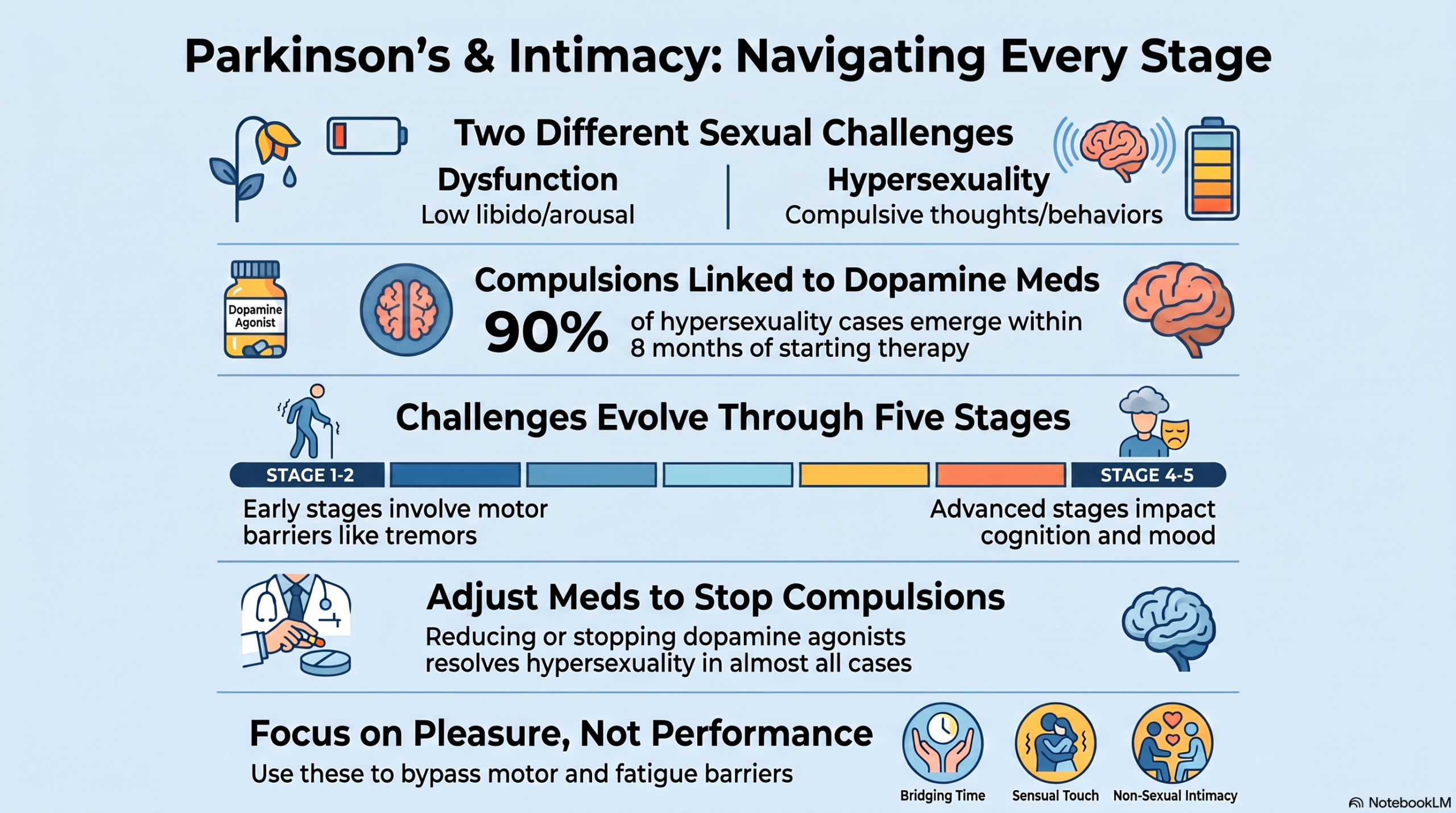
Many people as the condition moves on, find they are taking more and more drugs. Some medications are known to lower libido, others are known to raise it (Agonists). Talk to you Neurologist if there is a problem.
Guide for the Doctor’s Office
Medical professionals are part of your rehabilitation team, but they require detailed data.
- Document the Problem: Provide a clinical description of the challenge.
- Establish a Timeline: Note the onset and whether symptoms are progressive.
- Identify Triggers: What exacerbates or alleviates the issue?
- State Desired Outcome: Specify if you need information, a specialist referral, or a prescription.
Professional Tip: Practice saying “uncomfortable words” at home to desensitize yourself. Alert the office in advance that you may need extra time, or tell the nurse upon arrival that you wish to discuss sexual health concerns so the doctor is prepared to address them.
8. Conclusion: The Multidisciplinary Path Forward
Navigating the changes in intimacy brought on by Parkinson’s is a collaborative process. A multidisciplinary team is available to assist, including:
- Medical Doctors/PAs/NPs: For medication management and prescriptions.
- Physical and Occupational Therapists: For assistance with positioning, energy conservation, and environmental aids.
- Social Workers and Nurses: To help navigate role changes and emotional distress.
Reclaiming intimacy requires patience. Arousal may take longer, and orgasm may occasionally be elusive. The key is to practice mindfulness—finding joy in where you are in the moment rather than focusing on a specific destination. Through proactive planning and clinical honesty, intimacy can remain a vibrant and essential part of the Parkinson’s journey.
Sources
https://parkinsonseurope.org/parkinsonslife/sex-intimacy-parkinsons-expert-guide/#primary
American Parkinson Disease Association
Davis phinney foundation
Monique Thoonsen’s handbook is a vital guide